Back to Home
SimulationsVR/XRHealthcare & Research

Every Breath Matters

VR educational simulation helping lung cancer patients understand treatments, manage symptoms, and navigate survivorship through immersive, interactive learning.

Client

Columbia University

Platform

VR Headset (Meta Quest)

Engine

Unity (XR Interaction Toolkit)

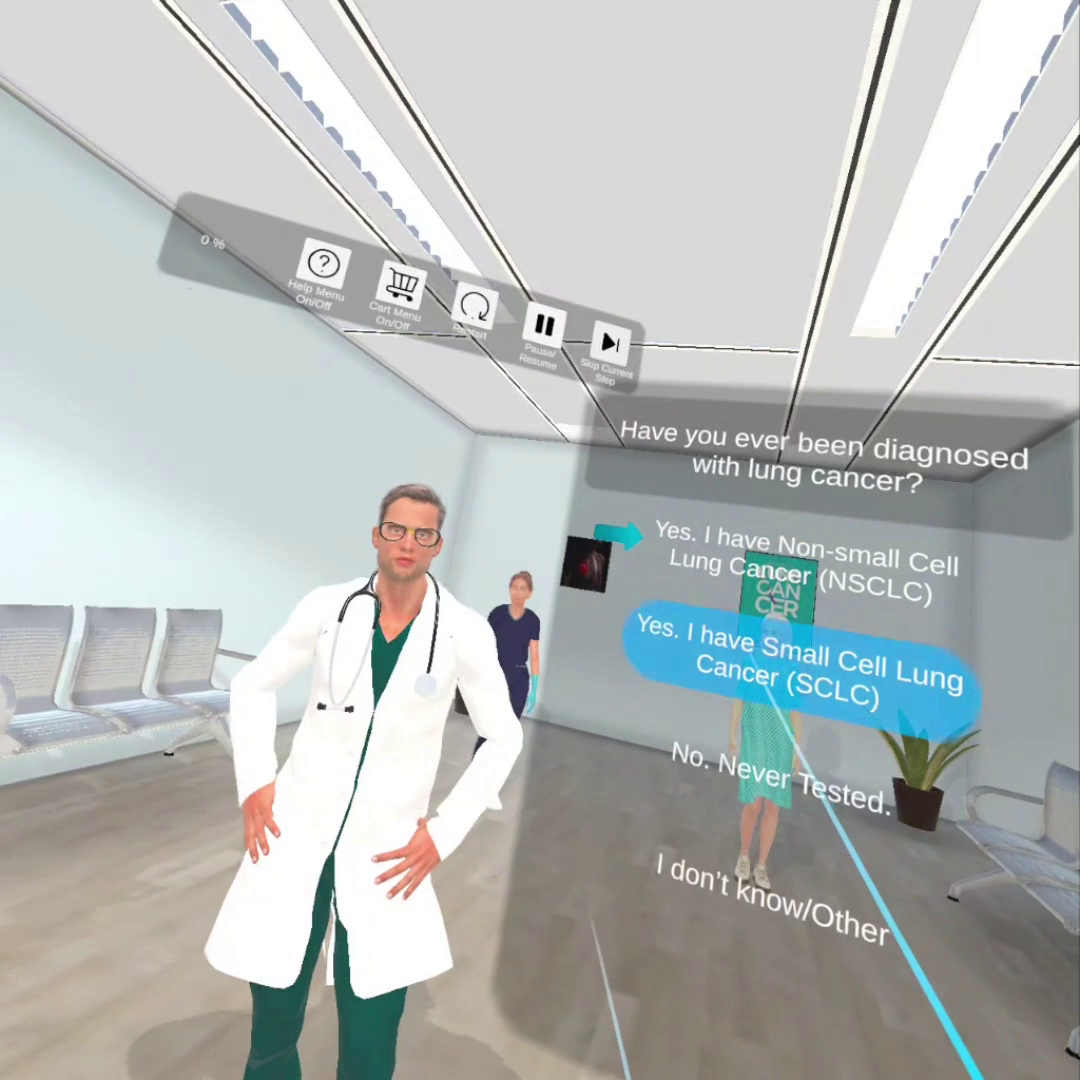
Module onboarding and guidance — featuring avatar narration, questionnaires, VR control explanations, and room navigation to help patients acclimate before starting core content.

Project Overview

Every Breath Matters is a VR educational simulation designed to help lung cancer patients understand treatments, manage symptoms, and navigate survivorship through immersive, interactive learning. Developed in partnership with Columbia University and built in Unity, it combines empathy-driven storytelling, evidence-based medical insights, intuitive XR interactions, and human-centered design elements to enhance comprehension, engagement, and emotional support.

The system is built with a modular scene structure, which allows each learning module to be developed independently and grouped into separate apps. This structure enables the creation of additional modules over time, such as Smoking Cessation and Survivorship, while maintaining a cohesive and consistent learning flow across the grouped modules.

Goals & Challenges

The goal of Every Breath Matters was to create a patient-centered VR experience that helps lung cancer patients understand their treatment and recovery in a clear, engaging, and supportive way. The team overcame challenges related to multi-module flows, user experience, comfort, and VR performance to deliver a scalable and clinically reliable educational system.

Project Goals

  • Deliver an engaging and accessible VR learning experience that helps users understand complex health information with clarity and confidence.
  • Provide a guided, supportive learning pathway through narration, prompts, and structured interactions.
  • Ensure a comfortable and intuitive VR environment suitable for users of all experience levels, including those with limited mobility or sensitivity to motion.
  • Maintain a consistent and cohesive user experience across all educational modules to build familiarity and reduce cognitive load.
  • Build a flexible, modular system architecture that allows new educational modules to be added seamlessly.
  • Support reliable, clinic-friendly deployment with smooth onboarding, easy operation, and minimal setup.
  • Reduce cognitive load by transforming complex medical information into visual, interactive explanations.
  • Provide clinicians with a standardized teaching tool to ensure consistent messaging across staff.

Challenges Encountered

  • Designing a unified user experience across multiple, independently developed learning modules.
  • Balancing comfort, safety, and usability in VR, particularly for users unfamiliar with immersive technology or sensitive to motion.
  • Coordinating complex module flow and session progression, including intros, learning content, questionnaires, and completion states.
  • Synchronizing narration, on-screen guidance, and interactive elements so users receive timely, consistent instructions without feeling overwhelmed.
  • Managing technical constraints of multi-scene architecture, including state management, scene restarts, and cross-module interoperability.
  • Translating sensitive medical content into VR while balancing accuracy, empathy, and emotional support.
  • Testing with diverse patient profiles to ensure accessibility, comfort, and usability across varying levels of VR familiarity.

Our Approach & Solution

To achieve the client's goals, FierceGuppy followed an agile, sprint-based workflow, collaborating closely with Columbia University to ensure medical accuracy and an optimal user experience. Each sprint focused on expanding interactivity, narrative depth, and technical polish, from the avatar-driven core loop to the integration of personalized patient education scripts with ElevenLabs and PlayFab.

Design & Development

  • Structured the system around a modular, scene-based architecture, enabling independent development of learning modules and scalable expansion into separate apps.
  • Built a centralized Module Manager to coordinate narration, questionnaires, progress, and completion flow across scenes.
  • Developed reusable UI components—popups, prompts, and question widgets—to ensure consistency and ease of iteration.
  • Implemented guided onboarding sequences for each module, combining narration, timed prompts, and controlled movement.
  • Prioritized XR comfort through calibrated movement systems, height correction, and controlled interactions.

Technologies & Tools

  • Unity with XR Interaction Toolkit, XROrigin, and built-in VR locomotion systems.
  • TextMeshPro for accessible, high-contrast instructional UI and questionnaires.
  • PlayFab for session logging, data tracking, and future personalization.
  • SALSA LipSync for realistic avatar communication and synchronized narration.
  • ElevenLabs for personalized narration scripts.

Creative & Technical Innovations

  • Developed a flexible, event-driven module flow that allowed each scene to define its own onboarding, narration, and interaction logic.
  • Designed a dynamic XR origin and height-correction system to improve comfort for users of different statures.
  • Implemented movement restrictions and controlled pacing during narration to reduce cognitive overload.
  • Created a reusable questionnaire system with state-based progression.
  • Built scalable narration timing tools to synchronize voice lines with visual aids.

Visuals & Media

App Onboarding, Login & Pathway Selection

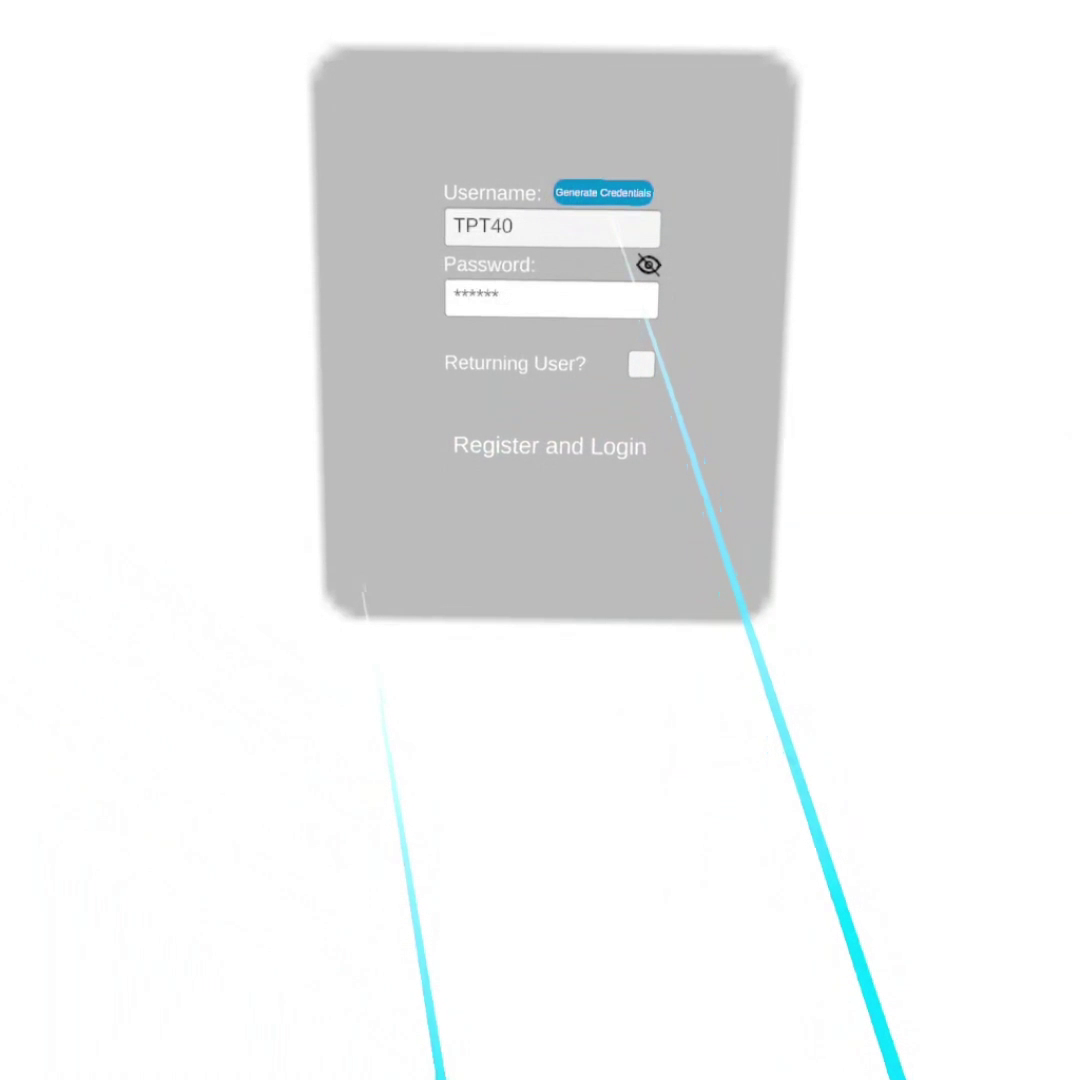
Demonstrates the clinic-friendly login/registration process, initial app setup, and the ability to choose between “Every Breath Matters” or “Quit2Live.”

Onboarding Demo 1
Onboarding Demo 2
Onboarding Demo 3
Onboarding Demo 4

Interactive Simulations & Patient Engagement

Demonstrates key interactions across different modules, including entering rooms to access relevant information, selecting cards on screens to reveal content, exploring meditation environments and completing guided meditations, completing the Every Breath Matters experience including patient report generation, and transitioning into Quit2Live, as well as engaging with specific interactions such as spot triggers.

XR Interaction & Comfort

Demonstrates height-adjusted movement, teleportation, and rotation, along with guided and restricted interactions such as elevator sequences and step-by-step prompts to ensure accessibility, comfort, and ease of navigation.

Report & Plan Outputs

Shows the demo patient report in Every Breath Matters and the Quit2Live cessation plan, illustrating how outputs are customized based on user interactions within each module while maintaining privacy and clarity.

Patient Report 1
Patient Report 2
Quit2Live Cessation Plan

Results & Impact

The Every Breath Matters VR system provided an engaging, compassionate, and informative space for lung cancer patients to explore treatment and recovery. Healthcare professionals praised its clarity and emotional resonance, while patients highlighted the ease of use, personalization, and supportive guidance. The project validated the value of immersive patient education and established a scalable, modular framework for future VR health programs.

Educational Flow & Content

  • Delivered a comprehensive, multi-module XR patient education system featuring structured introductions, guided narration, and a consistent questionnaire flow.
  • Enabled seamless modular expansion, allowing new educational scenes and module types to be added with minimal engineering overhead.
  • Supported engagement, clarity, comprehension, and emotional resonance through empathy-driven storytelling and visual aids.

XR Interaction & Usability

  • Achieved stable and user-friendly XR locomotion through centralized movement, origin management, and height-correction systems.
  • Reduced onboarding time for first-time VR users through intuitive controls, guided instructions, and soft onboarding sequences.

Clinical & Human-Centered Impact

  • Provided clinicians with a repeatable, consistent teaching tool to standardize patient communication.
  • Successfully demonstrated the feasibility of immersive patient education to clinical partners.
  • Positive feedback from clinicians and patients confirmed the platform's clarity, emotional support, and intuitive design.

Lessons Learned

  • Centralizing state management through a Module Manager significantly reduced complexity and improved consistency across multi-scene learning modules.
  • XR comfort features—particularly movement restriction during narration and height correction—are essential for usability, safety, and patient confidence.
  • Modular scene design accelerates the creation of new educational content and supports long-term scalability.
  • Patients benefit most from predictable patterns in narration and UI flow.
  • Combining narration with restricted movement improves comprehension and reduces anxiety.
  • Early usability testing prevents late-stage comfort or accessibility issues.
  • Human-centered design elements, including visual aids, voice navigation, and patient reports, enhance understanding and personalization.

Key Takeaways

Every Breath Matters shows how immersive VR can make complex medical education clear, engaging, and emotionally supportive. Its modular architecture and robust XR foundation enable seamless expansion, comfortable interactions, and high-quality patient education. By combining empathy-driven storytelling, AI-driven avatars, guided narration, and human-centered design, the project demonstrates scalable, adaptable solutions for healthcare learning.

Why This Project Stands Out

  • Combines XR interaction, guided narration, and modular learning workflows into a cohesive educational system.
  • Prioritizes accessibility, comfort, and emotional clarity—critical for patient-centered immersive experiences.
  • Transforms complex and sensitive medical education into calm, guided, and engaging experiences.
  • Bridges healthcare expertise and game design principles to create emotionally supportive learning.
  • Demonstrates how thoughtful technical architecture can support complex healthcare education in VR.

What We're Proud Of

  • A reusable modular architecture that streamlines the creation of new modules, including intro sequences, questionnaires, and progress tracking.
  • A robust XR foundation featuring dynamic origin management, smooth teleportation, and comfort-first movement systems.
  • A scalable framework capable of supporting additional health-education pathways and future immersive programs.
  • Delivering a high-quality, clinic-ready VR experience with a small, efficient team.
  • Demonstrating that immersive learning fosters empathy, understanding, engagement, and emotional support in healthcare contexts.
  • Showing that Unity and AI-driven avatars can humanize complex medical education.

Contact

Ready to transform complex ideas into immersive VR experiences? Connect with FierceGuppy Game Labs to explore how we can design interactive, human-centered solutions that educate, engage, and inspire.